
Many people aren’t aware that Radon is one of the leading causes of lung cancer (14% of all lung cancers are attributable to indoor radon). Many people also aren’t aware that Radon levels are historically high in Minnesota and specifically in Dakota County. You may be reading this wondering what Radon is, why it’s important, and how it relates to you. Well, if you are curious about any of these questions, you have come to the right place.
What is Radon? Radon is a naturally occurring odorless, radioactive gas. It comes from the long decay chain of uranium, and therefore is present in almost all rock, soil, and water. Basically, it is a gas that comes up from the ground into buildings and homes and can be harmful to breathe in at certain levels. The amount/level depends on things like weather, soil moisture, etc. and since Minnesota has four seasons as well as snow on the ground for what seems like 6 months out of the year, it is especially prevalent here.

Why is it important? Well it’s important because it is present almost everywhere, impossible to detect without testing, and it can cause lung cancer! The important thing is to at least be knowledgeable about it and to test in your home so you know how much you’re breathing in every day. According to the Environmental Protection Agency (EPA) the national action level (considered necessary to mitigate) is everything above 4 pCi/L or pirocuries per liter. The test simply involves a monitor sitting in your basement for 48 hours and only costs about $150 so I highly recommend everyone do this at some point. I have been involved in multiple transactions where the Radon comes back too high and a mitigation strategy was applied.
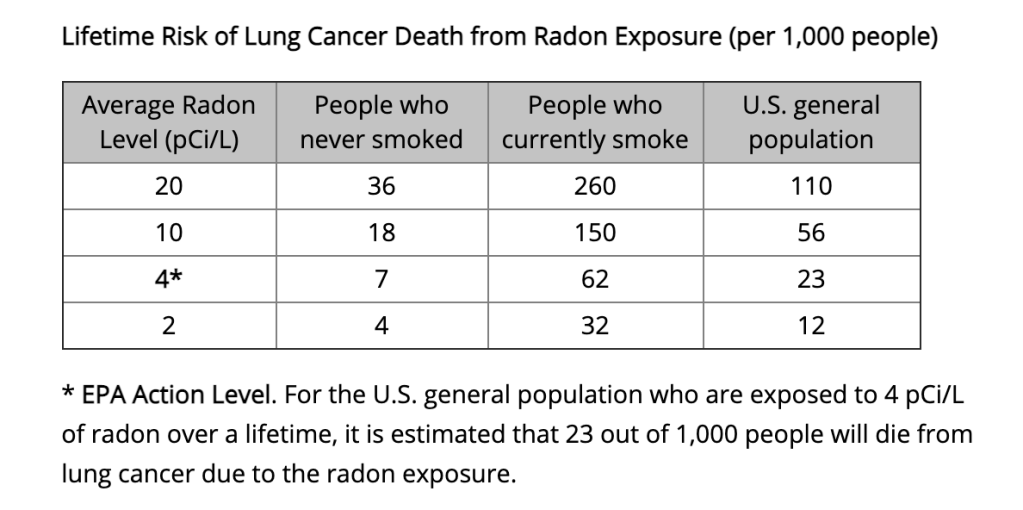
How does it relate to you? This was covered a little bit in the previous paragraph, but I will expand with an example. One home we had tested for a buyer had such a high radon level (over 7 pCi/L) that it was a deal breaker and the buyer backed out. They had an uncle with lung issues and partly attributed them to the Radon levels in his old home. With that said, Radon is relatively inexpensive to mitigate (around $1500) and is often negotiated into the deal but this case shows the seriousness of it for some people. Needless to say, as your agent I will always advise to get a Radon test upon buying a home. Even if you are a current homeowner and haven’t had it tested in a few years, I would advise you to do it too.
The last thing I want to do is freak you out about some cancer causing radioactive substance that is usually under control, but knowledge is power and I think people need to be aware about the presence of Radon. January is also the EPA’s National Radon Action Month, so now is a great time to look into it.
If you want to get Radon tested in your home, feel free to reach out as I have many contacts with local companies here in the South Metro.
Cheers to all my readers, and please come back for more next week.
Brady
 Brady Arthur Homes and Drones